
Hudson Place Residences Review: The 61.5% Sell-Through & The 5.1% Yield Underneath
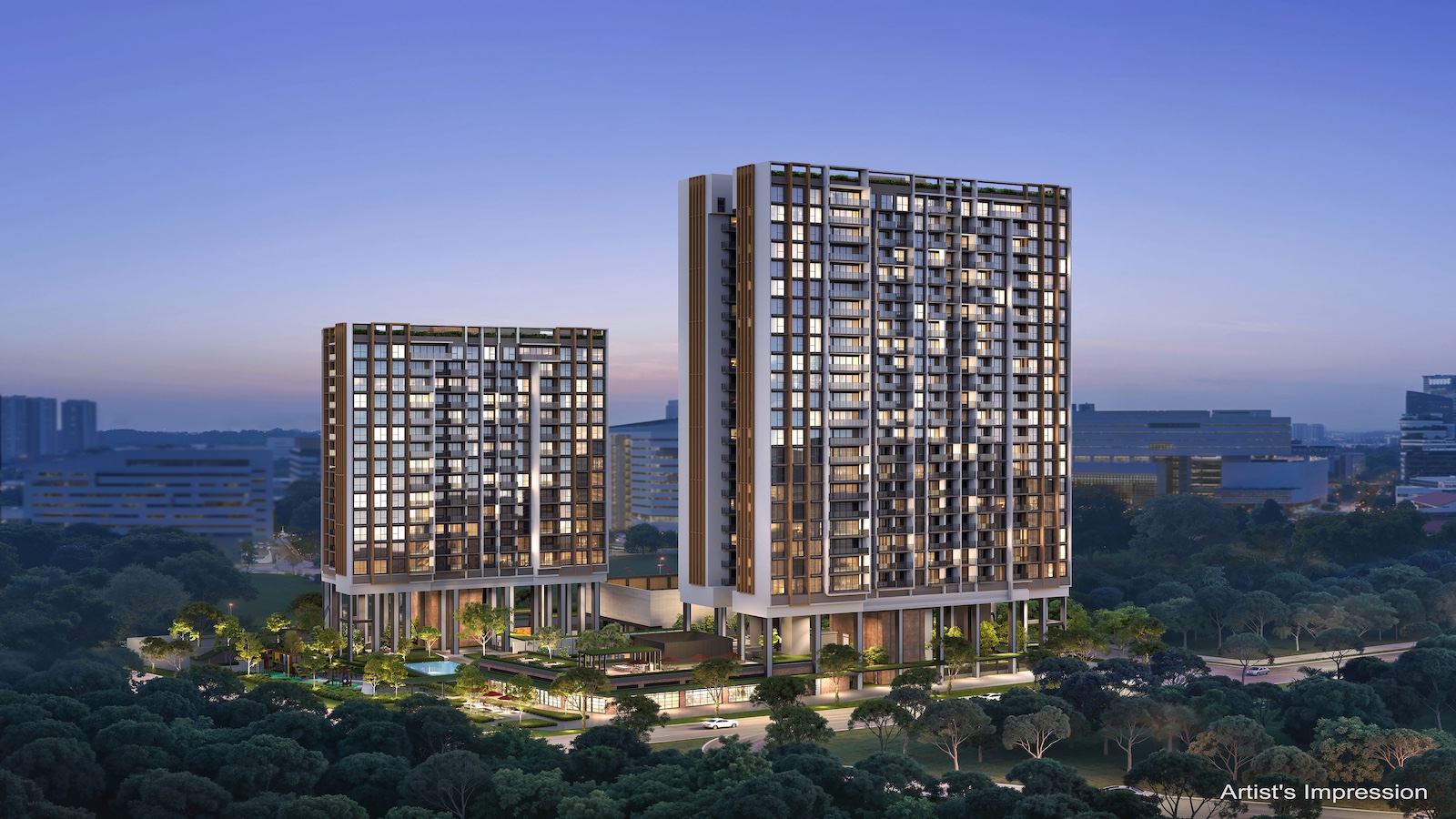
When the newspapers reported that Hudson Place Residences sold 61.5% on launch weekend, they told you one true thing and stopped. The number is real — 201 of 327 units transacted on 17 May 2026 at an average S$2,458 psf. But the take-up rate is the wrong place to look. What matters is which units sold, what they cost relative to the neighbour on the same road, and what 200 rental transactions and 17 years of one-north buyer-evolution data tell you about the next decade.
Over the past two months I have pulled 100 Bloomsbury Residences sale transactions, 200 one-north rental records across One-North Residences and The Rochester Residences, the 3-project buyer-profile evolution across the same precinct, and the developer's 160-page architect brief. This review walks the data section by section, ending in a verdict mapped to three audience tiers. The 61.5% headline is the entry point. The 5.1% gross yield on the 3-bedroom Premium is where the conversation should actually begin.
Data Verification: Hudson Place launch-weekend transaction data was pulled from the 17 May 2026 launch-results decode. Bloomsbury Residences sale transactions (n=100, Oct 2025 – May 2026), One-North Residences rental transactions (n=100, last 12 months), The Rochester Residences rental transactions (n=100, last 12 months), and the 3-project buyer-profile dataset were sourced from PropNex Investment Suite (URA Realis-backed). Unit mix, facility list, and developer JV credentials are drawn from the Qingjian Realty official architect brief.
The 61.5% Headline and the Stack-by-Stack Story Beneath It
When you read in the newspaper that 61.5% of Hudson Place sold on launch weekend, what the headline does not tell you is which units sold. That is the part that matters.
Look at how the 327 units absorbed on 17 May 2026, layout by layout.
| Bedroom Type | Units Offered | Indicative Sqft | Launch Status | Signal |
|---|---|---|---|---|
| 2-Bedroom Premium | 105 | 646 | Active inventory | Patient buyer pool |
| 2-Bedroom Premium + Study | 78 | 689 | Active inventory | Patient buyer pool |
| 3-Bedroom Deluxe | 14 | 893 | Every unit cleared ✓ | Highest conviction layer |
| 3-Bedroom Premium | 57 | 1,012–1,055 | Active inventory | Investment tier — time to choose |
| 4-Bedroom Premium | 26 | 1,152 | ~88% absorbed | Strong family conviction |
| 4-Bedroom Suite + Flexi | 42 | 1,432 | Active inventory | Family-home tier |
| Penthouses | 5 | 1,744–2,196 | 1 of 5 sold | Selective premium absorption |
Two facts jump out of this table.
First, the 3-bedroom Deluxe collection cleared completely. All 14 units. These are the 893 sqft layouts at the entry of the 3-bedroom tier — the unit type that gives a buyer a real third room without pushing the quantum past S$2 million. Every single one sold on launch weekend. That is not a market accepting a discount. That is a market saying yes at conviction.
Second, the 4-bedroom Premium absorbed at roughly 88% — 23 of 26 units transacted. These are 1,152 sqft layouts priced around S$2.7 million each, and the buyers paying nearly S$3 million per unit cleared at almost the same conviction as the smallest-tier buyers. In most launches, the entry tier clears first and the larger units linger for many months. Here both ends of the table moved together. Same project, two very different buyer pools, both writing the cheque on the same weekend.
One of the five penthouses also sold. Penthouses rarely clear at launch — they typically sit for six to eighteen months while the developer's marketing waits for the right buyer. One out of five clearing on weekend one is a strong selective signal.
The middle tiers — 2-bedroom Premium, 2-bedroom Premium + Study, 3-bedroom Premium, 4-bedroom Suite + Flexi — are where active inventory still sits. That is not weakness. That is the investment-tier band where patient buyers still have the time to choose stack, orientation, and floor. The work begins below the headline; the headline is just the door.
Hudson Place vs Bloomsbury: Same Road, Same Year, Different Outcomes
Two new launches on Media Circle. Both fresh 99-year leasehold. Both inside the one-north precinct. Bloomsbury Residences launched earlier and absorbed roughly 25% of inventory on its launch weekend. Hudson Place absorbed 61.5%. Same road, same year, same developer-cycle land cost band — and yet very different outcomes.
The single most important reason is pricing discipline. Hudson Place came in roughly S$500 per square foot below Bloomsbury across every bedroom tier. Over 100 Bloomsbury sale transactions recorded between October 2025 and May 2026, the per-bedroom medians are clear:
| Bedroom Tier | Bloomsbury Median PSF | Bloomsbury Median Quantum | Hudson Place Indicative | The Gap |
|---|---|---|---|---|
| 2-Bedroom | S$2,582 | S$1.76M (n=34) | ~S$2,065 psf / from S$1.4M | ~S$517/sqft cheaper |
| 3-Bedroom | S$2,539 | S$2.45M (n=41) | ~S$2,020 psf / from S$2.0M | ~S$519/sqft cheaper |
| 4-Bedroom | S$2,588 | S$3.16M (n=25) | ~S$2,239 psf / S$2.7M–S$3.4M | ~S$349/sqft cheaper |
The Hudson Place launch average came in at S$2,458 psf overall. Bloomsbury's overall mean across the 100 transactions sits around S$2,567 psf. That is a roughly S$109 per square foot gap before you account for which specific bedroom you are comparing. On a 904 sqft 3-bedroom, that S$109 gap translates to about S$98,500 in lower entry quantum.
Said simply: two buildings on the same road, same year, similar product. Hudson Place is cheaper by about S$100,000 for a 3-bedroom. That is why it sold faster.
There are other reasons too. Hudson Place includes a tennis court, which is rare in one-north and matters to a specific buyer subset. The facility count sits at 49. The interior fittings are FOTILE (75 iF Awards, 35 Red Dot Awards), with SMEG and AXOR European fixtures. Bloomsbury is competitive on most of these, but on raw entry math Hudson Place is the structurally cheaper buy — and the launch weekend confirmed buyers noticed.
What Bloomsbury does have is an earlier TOP — 2028 versus Hudson Place's 30 September 2029. For a buyer who needs rental income flowing one year sooner, that timing difference is real. For everyone else, the pricing advantage is the deciding factor.
Who Is Buying Hudson Place — And Why That Tells You About Tenants in 2030
One of the most useful things you can do before buying a brand-new launch is look at who bought the older buildings on the same road, and what happened to that buyer mix over time.
For one-north we have 17 years of data across three projects in the same precinct.
| Project | TOP | Tenure | Singaporean | PR | Foreigner | HDB-Upgrader Buyers |
|---|---|---|---|---|---|---|
| Bloomsbury Residences | 2028E | LH99 | 88.67% | 10.67% | 0.67% | 39% |
| One-North Residences | 2009 | LH99 | 71.24% | 16.90% | 10.56% | 26% |
| The Rochester Residences | 2011 | Freehold | 76.98% | 13.84% | 7.47% | 17% |
The pattern is clear once you read down the columns.
Bloomsbury Residences — the newest of the three, TOP-ing in 2028 — sits at 88.67% Singaporean ownership today, with PR at 10.67% and only 0.67% foreign. Thirty-nine percent of those Singaporean buyers came directly from HDB upgrader cohorts. This is what a brand-new one-north launch looks like at the buyer-base stage: dominated by local owner-occupiers, almost no foreign capital.
One-North Residences — TOP 2009, now 17 years old — sits at 71.24% Singaporean today, with PR at 16.90% and foreign ownership at 10.56%. The HDB-upgrader cohort has dropped from the launch-period 39% to 26%. The building is older. Owners have rented out or sold. Foreign tenants and PR tenants have moved in. The Singaporean share has not collapsed — but it has clearly migrated downward by roughly seventeen percentage points over 17 years.
The Rochester Residences — TOP 2011, freehold, 15 years old — sits at 76.98% Singaporean, 13.84% PR, 7.47% foreign. Slightly different curve because of the freehold tenure premium, but the same direction: foreign and PR ownership rising over the asset's life.
What this tells you about Hudson Place: today's buyer pool is overwhelmingly Singaporean owner-occupier. That protects against the early-flip volatility that hits projects where speculators dominate the launch — there is no first-wave panic sell when 88% of your unit holders intend to keep the property. The foreign tenant pool that eventually drives rental yield in the precinct is already empirically proven by the older buildings down the road. It does not need to be predicted; it has already happened twice.
The people buying Hudson Place today are Singaporeans who want to live there or to hold for medium-term yield. The expats and PRs come later, after the building is older — and we can see this happening, building by building, in the older condos on the same precinct.
What One-North Tenants Are Actually Paying in 2026
Stop guessing about tenant demand. Look at what tenants are actually paying today.
Across One-North Residences and The Rochester Residences — the two largest privately-owned condos in walking distance of Hudson Place — there were 200 rental transactions recorded over the last 12 months (100 at each building). Both projects are older, both are physically adjacent to Hudson Place's plot. What their tenants pay is the most defensible empirical proxy for what Hudson Place will rent for once it TOPs in 2029.
| Layout | Median Monthly Rent | Range (Last 12 Months) |
|---|---|---|
| 1-Bedroom | S$3,500/mo | S$3,200 – S$4,500 |
| 2-Bedroom | S$5,100/mo | S$4,000 – S$7,200 |
| 3-Bedroom | S$7,000/mo | S$6,300 – S$11,000 |
| 4-Bedroom | S$7,900/mo | S$7,000 – S$9,600 |
Project these medians against Hudson Place's indicative pricing and the gross rental yields land here:
| Hudson Place Layout | Indicative Quantum | Projected Monthly Rent | Gross Yield | Note |
|---|---|---|---|---|
| 2BR Premium (646 sqft) | S$1.4M | S$5,100/mo | ~4.3% | Solid entry-tier yield |
| 3BR Premium (1,012–1,055 sqft) | S$2.0M | S$7,000/mo | ~5.1% ★ | Buried-headline sweet spot |
| 4BR Premium (1,152 sqft) | S$2.7M | S$7,900/mo | ~3.5% | Family-home math, not yield play |
| 4BR Suite + Flexi (1,432 sqft) | S$3.4M | S$7,900/mo | ~2.8% | Own-stay quantum, not investment |
The 3-bedroom Premium yield at roughly 5.1% gross is the buried headline of this review. On a brand-new fresh 99-year leasehold private launch in 2026 Singapore, 5.1% gross is strong. It comfortably clears the 4.3% the 2-bedroom Premium projects and substantially clears the 3.5% the 4-bedroom Premium projects.
Two buildings nearby already have tenants paying real rent. Last year alone, 200 of them signed new leases. We use their numbers to estimate what Hudson Place rentals will look like — not a developer projection, not a brochure number, an empirical floor based on transactions already on the books.
These are gross yield projections — your net depends on entry quantum, financing structure, maintenance, and your existing HDB equity timing. Map your specific timeline against CPF and OTP schedule with the HDB-to-Condo Timeline calculator before locking the layout you intend to chase.
The 4-Bedroom Question: Why the Biggest Units Are Family Homes, Not Investments
At launch every 3-bedroom Deluxe cleared and 88% of 4-bedroom Premium absorbed. Both moved fast. From the absorption table alone you might conclude that the bigger units are the stronger pick — they sold at conviction.
But yield math separates them sharply.
A 3-bedroom Premium at S$2.0M renting at S$7,000 a month gives a gross yield around 5.1%. A 4-bedroom Premium at S$2.7M renting at S$7,900 a month gives around 3.5%. The 4-bedroom Suite + Flexi at S$3.4M against the same S$7,900 a month rent lands at roughly 2.8%. The bigger units cost a lot more — but rents in the precinct do not scale linearly with size. The marginal rent you get from a 4-bedroom over a 3-bedroom is far smaller than the marginal quantum you pay for it.
Why? Because the rental market in one-north is dominated by working professionals — Mediapolis tenants, NUS faculty, INSEAD international students, expat families with one or two children. They occupy 2-bedroom and 3-bedroom layouts. They do not pay materially more for a 4-bedroom unless they have specific family circumstances that require it. So 4-bedroom rents flatten at the top of the demand curve.
The unit mix from the architect brief tells the same story.
| Layout | Units | Sqft | Share of Project | Spec Tier |
|---|---|---|---|---|
| 2BR Premium (B1a/b/c/d) | 105 | 646 | 32.1% | Investment tier |
| 2BR Premium + Study (B2/B3) | 78 | 689 | 23.9% | Investment tier |
| 3BR Deluxe (C1) | 14 | 893 | 4.3% | Investment / hybrid |
| 3BR Premium (C2/C3/C4) | 57 | 1,012–1,055 | 17.4% | Investment / hybrid |
| 4BR Premium (D1a/b) | 26 | 1,152 | 8.0% | Family home (integrated fridge + dishwasher) |
| 4BR Suite + Flexi (D2a/b) | 42 | 1,432 | 12.8% | Family home (private lift + walk-in wardrobe) |
| Penthouses (PH1–5) | 5 | 1,744–2,196 | 1.5% | Family home (full premium stack) |
The developer's own design choices reinforce the read. The 2-bedroom layouts (646 sqft) come fitted with free-standing fridges, induction hobs, combi washer-dryers. Functional, efficient, sized for the working-professional tenant or HDB-upgrader own-stay buyer. The 3-bedrooms add gas hobs and a combi steam oven. The 4-bedroom Premium adds integrated fridges and a built-in dishwasher — the spec moves from investment-tier to family-living-tier. The penthouses go further still, with built-in coffee machines and wine chillers.
The developer has spec-tiered the project deliberately. The 2-bedroom and 3-bedroom layouts are sized and equipped for the investment-tier buyer or single/couple own-stay. The 4-bedroom Premium and Suite + Flexi are sized and equipped for the family-home own-stay buyer.
Said simply: the big units sound impressive, but the math says they are for living in, not renting out. If you want investment yield, the 2-bedroom and 3-bedroom give you better returns. If you want a family home in one-north and the math is supportable for own-stay, the 4-bedroom tiers are the right tools — but they are not yield plays.
Is Hudson Place CCR or RCR — and Why One-North Plays By Its Own Pricing Rules
One of the most common questions on property forums right now is whether Hudson Place sits in CCR or RCR. The short answer: it is in District 5, which classifies as RCR (Rest of Central Region — the middle ring of Singapore, between the city centre and the suburbs).
But the more useful answer is that the question is the wrong question.
"RCR" as a label lumps Hudson Place together with developments in West Coast, Queensway, and Pasir Panjang. Those places operate on very different pricing logic. One-north has its own micro-precinct economics that diverge from broader RCR averages, anchored by three structural moats.
The land-cost moat. Hudson Place's developer secured the site through a GLS bid (government land sale — the auction process where developers bid for plots of land released by the government) at S$1,196 psf ppr. The very same 4-way joint venture — Qingjian Realty, Forsea Holdings, CYZ Land, and Jianan Capital — went on to win the adjacent Dover Drive GLS site at S$1,556 psf ppr. That is a 30% higher land cost on the next plot down the road. The Dover Drive tender result sets the structural floor for what the next one-north launch will cost. Mathematically, the next new launch on Hudson's doorstep will be priced 30% higher than Hudson is today, simply because the land underneath cost 30% more.
The JV credential moat. Qingjian Realty is the consumer-facing developer brand. Behind Qingjian sits CCCC (China Communications Construction Company) via Qingjian → CCCG → CCCC corporate ownership. CCCC ranks #61 on the Fortune Global 500 (2024) and has held the #1 Asian international contractor position for 19 consecutive years. Their Singapore reference projects include Changi Runway 3 (PK3), the JB-Sg RTS Link (T235), the Tampines North MRT and tunnels (CR109), the Jurong Integrated Transport Hub (J120), and the Boon Lay JRL station (J106). That is infrastructure-scale delivery credibility behind a 327-unit residential build. Buyer delivery risk is materially lower than a typical 4-way JV without this backing.
The tenant-demand moat. Within a 1-to-2 kilometre radius of Hudson Place sit Mediapolis (Mediacorp, Razer, Grab, Infinite Studio, STT Media Hub), the National University of Singapore (NUS), INSEAD, Tanglin Trust School, ACS Independent, ACS Junior College, UWC Dover Campus, and Fairfield Primary School. The tenant pool — students, faculty, expat families, tech professionals — is structural, not speculative. It does not vanish in a downturn the way speculative tenant demand does in non-anchored precincts.
So when someone asks "is Hudson Place CCR or RCR?", the honest answer is that the label tells you very little. On paper Hudson Place sits in the middle-ring of Singapore. But one-north is its own micro-market — same developers paid 30% more for the empty plot next door, the same infrastructure-scale delivery group is behind the build, and the same precinct anchors keep tenant demand structural. Pricing in one-north tracks one-north economics, not the broader RCR average.
The 7-to-10 Year Window: Today's Owners, Tomorrow's Tenants
We do not recommend a property without a clear exit framework mapped to a buyer profile. For Hudson Place that exit framework runs on a 7-to-10 year horizon, anchored on the 30 September 2029 TOP date.
Years 1 to 3 post-TOP (2030 to 2032). Owner-occupiers move in. The 88.7% Singaporean cohort identified in the launch buyer mix becomes the live ownership base. This is the lowest-volatility window in the asset's life — owners are settling in, not selling. Rental supply from the project itself is light because most units are owner-occupied. The buyer of any unit sold in this window is paying for a brand-new asset with a known buyer base.
Years 3 to 7 (2032 to 2036). The foreign tenant pool starts forming as some owners decide to rent out — either because of overseas relocation, asset rotation, or portfolio rebalancing. This is the empirical pattern from One-North Residences and The Rochester Residences. PR and foreign ownership ticks up. Rental yield stabilises at the precinct medians. By 2034 you have a five-year-old building with operating cashflow data, a known maintenance regime, and a sinking fund position you can audit.
Years 7 to 10 (2036 to 2039). The resale market opens up at a comparable lifecycle to One-North Residences and The Rochester Residences today. The pricing benchmark Hudson Place resale will be measured against by then is not what Hudson sold at in 2026 — it is what the surrounding projects sell at in 2036.
Here is where the Dover Drive math matters. By 2036, Bloomsbury Residences is 8 years old. Dover Drive — same JV consortium, same precinct, 30% higher land cost — is at TOP in roughly 2027 to 2028 and pricing 30% above Hudson Place's launch. New buyers walking into one-north in 2036 are comparing a fresh Dover Drive (now 8 to 9 years old) at the precinct's most expensive end against an 8-year-old Hudson Place at the precinct's most affordable end. Hudson Place's resale narrative is anchored to a higher comparable benchmark, not exposed to a downward comparable.
Said simply: you buy now, you live in it or rent it out, and by the time you are ready to sell — about 7 to 10 years later — the building next door (Dover Drive) is now an aging premium asset that opened at a higher price. That makes your Hudson Place look like a bargain to the next buyer, even after you have held it for almost a decade.
The risk that does exist: if the URA accelerates one-north GLS releases dramatically and the precinct floods with new supply between 2030 and 2035, the exit comparable gets compressed. Worth watching, not worth panicking over. URA cadence in one-north has historically been measured, not aggressive.
The Dunamis Verdict: Who Should Buy, Who Shouldn't, and When
Hudson Place is right for three audience segments, each at a different layout and quantum band. The math, the precinct moat, and the exit framework all point at clear yes-no boundaries.
Segment A — HDB upgraders with $1.4M to $2.0M budget. The 2-bedroom Premium (646 sqft, indicative S$1.4M) and the 2-bedroom Premium + Study (689 sqft) are the entry tier. The monthly outlay is sustainable on dual-income HDB-upgrader profiles. The precinct lifecycle supports either own-stay or rent-out flexibility — you are not locked into a single use case at the entry quantum. Entry is HDB-equity-funded; the math holds if your CPF refund and OTP schedule align cleanly. Before locking the OTP, stress-test your entry quantum against MAS TDSR and LTV limits using the Gap Decoder affordability calculator — particularly important if your HDB sale completes after the Hudson Place OTP date.
Segment B — Family upgraders and second-property buyers with $2.0M to $2.7M. The 3-bedroom Premium (1,012 to 1,055 sqft, indicative S$2.0M) is the sweet spot of the project. Best yield position at roughly 5.1% gross. Strongest precinct rental signal — the 3-bedroom rents at the highest layout-by-quantum ratio in the precinct. Conviction at launch (every 3-bedroom Deluxe cleared, with the Premium tier offering the better size-quantum combination) confirms the layout reads in the market. This is the buried-headline pick of the whole project.
Segment C — Family own-stay buyers with $2.7M to $3.4M. The 4-bedroom Premium (1,152 sqft, indicative S$2.7M) or the 4-bedroom Suite + Flexi (1,432 sqft, indicative S$3.4M). These are family homes, not investments. Spec-tiered for own-stay living — integrated fridge, built-in dishwasher, private lift, walk-in wardrobe. Do not make this a yield play; the math does not support that frame. For the 4-bedroom own-stay buyer, the progressive payment schedule between OTP and Q3 2029 TOP matters more than the headline price — model the cashflow against your existing-property sale timing using the New Launch Progressive Calculator.
Clear no-buys. Foreign investors looking purely for high yield will find better options elsewhere — the precinct delivers structural tenant demand but does not deliver outsized foreign-buyer yield. Pure flippers should look elsewhere; one-north is not a flip precinct, and the buyer-base evolution data suggests early flips face limited buyer pools. Buyers whose financing only stretches at extreme HDB-overhang — meaning the entry math only works if you delay the HDB sale by 12 months or more and carry both properties on bridging — should wait or downscale; the project is not worth taking on financing strain.
The decision frame. If your household income comfortably supports the 2-bedroom Premium without selling existing assets at a distressed price, you can act. If acting requires liquidating other property at a soft point in the cycle, the answer is to wait or downscale. There is no single right answer to "should I buy Hudson Place" — there is a right answer for your specific position, and the layout you pick should match the segment your profile fits, not the layout the marketing pulls you toward.
View Project Data →Original Research
The Two Clocks Problem: Why New Launch Prices Lift Leasehold Value
Your 99-year lease ticks down every year — but new launch prices nearby keep pulling resale values up. Here is what 30 years of data actually show, and why the popular lease-decay forecasts get it wrong.
Read the AnalysisDecision Tools
Run the Numbers Before You Decide
Three free calculators. No sign-up. Decode your affordability, cashflow, and transition in sequence.
Can I Afford This Condo?
Stress-test your TDSR, minimum cash, and ABSD before you commit.
Open CalculatorWhen Do I Pay What?
Map your progressive payment schedule for new launch condos.
Model CashflowSell HDB or Buy Condo First?
Time your transition to avoid ABSD and bridging loan exposure.
Open MatrixDiscuss This Analysis
Send us a message to discuss how this insight applies to your specific situation.
Speak Directly With the Founders.
Many of our clients prefer an immediate, private conversation to discuss their portfolio. Tap below to connect directly with Sam and Lisa to strategise your next move.
Hudson Place Residences Review FAQ: Pricing, Yield & 7-Year Outlook
Hudson Place Residences is worth buying for HDB upgraders and second-property buyers with budgets between $1.4M and $2.0M who want fresh 99-year leasehold in a structurally undersupplied tech-and-education precinct. The data supports the case: launch weekend cleared 61.5% of inventory at $2,458 psf — roughly $109/sqft cheaper than neighbouring Bloomsbury Residences. The 2-bedroom Premium (646 sqft, ~$1.4M) and 3-bedroom Premium (1,012-1,055 sqft, ~$2.0M) offer the strongest yield positions in the project, with projected gross rental yields of 4.3% and 5.1% respectively based on adjacent-building rental data. Foreign investors seeking high yield will find better options elsewhere; this is a precinct play for buyers with a 7-to-10 year hold horizon.
Yes — Hudson Place sold 201 out of 327 units (61.5%) on launch weekend (17 May 2026) at an average of $2,458 psf. More importantly, the unit-mix data shows where conviction was strongest: every single 3-bedroom Deluxe unit cleared, 88% of the 4-bedroom Premium inventory transacted, and one of five penthouses sold. By comparison, neighbouring Bloomsbury Residences on the same Media Circle road absorbed roughly 25% at its own launch — making Hudson Place's outcome an outlier within the one-north precinct, driven primarily by pricing discipline.
Hudson Place is the structurally cheaper of the two new launches on Media Circle, with median per-bedroom pricing approximately $500/sqft below Bloomsbury (2BR: ~$2,065 vs $2,582; 3BR: ~$2,020 vs $2,539; 4BR: ~$2,239 vs $2,588 based on 100 Bloomsbury transactions Oct 2025 – May 2026). For a 904 sqft 3-bedroom, that's roughly $98,500 in lower entry quantum. Both are fresh 99-year leasehold in the same precinct with similar amenity access. Hudson Place also includes a tennis court (rare in one-north), 49 facilities, and FOTILE/SMEG/AXOR-grade fittings. Bloomsbury has earlier TOP (2028 vs Hudson's Q3 2029), which matters if rental income timing is a deciding factor. For most buyers, Hudson Place's pricing advantage is the deciding factor.
Hudson Place sits in District 5, which classifies as RCR (Rest of Central Region) by URA's regional definition. However, "RCR" is a broad label that lumps Hudson Place with West Coast, Queensway, and Pasir Panjang developments that operate on very different pricing logic. One-north functions as its own micro-precinct, anchored by Mediapolis tenancy demand (Mediacorp, Razer, Grab, Infinite Studio), NUS, INSEAD, and three international schools within a 2km radius. The same 4-way JV consortium behind Hudson Place won the adjacent Dover Drive GLS site at $1,556 psf ppr — 30% higher than Hudson's land cost — which projects a 2027-2028 launch at significantly higher pricing. Hudson Place's pricing tracks one-north precinct economics, not RCR averages.
Based on 200 rental transactions across One-North Residences and The Rochester Residences (last 12 months), the precinct median rents are approximately $5,100/month for 2-bedroom, $7,000/month for 3-bedroom, and $7,900/month for 4-bedroom layouts. Projected against Hudson Place indicative pricing, gross rental yields are: 2-bedroom Premium ~4.3%, 3-bedroom Premium ~5.1%, 4-bedroom Premium ~3.5%, 4-bedroom Suite + Flexi ~2.8%. The 3-bedroom Premium offers the strongest yield position. Note that these are gross yield projections based on adjacent-building empirical data; net yields will be lower after maintenance and other holding costs.
Hudson Place is expected to TOP on 30 September 2029. The buyer profile is heavily Singaporean owner-occupier, consistent with the Bloomsbury Residences launch profile (88.7% Singaporean, 39% from HDB upgrader cohort, less than 1% foreign). This non-speculative buyer base protects against early-flip volatility post-TOP. Foreign tenant pool typically forms 5-10 years after TOP as original owners either continue own-stay or rent out — a pattern empirically observed in the adjacent One-North Residences (10.6% foreign ownership at 17 years post-TOP) and The Rochester (7.5% foreign at 15 years post-TOP). For Hudson Place, expect foreign tenant absorption from 2032-2036 onward.